After Arion’s thrilling escape from the jaws of death, thanks to Esteban’s and Donovan’s relentless pursuit of the information leak, the Cyber Knights finally had their moment of serendipity. This time, Esteban not only identified the leak and the person behind it, but he also uncovered the contacts of the cell to which the leak reported.
Utilizing the previous incident as a catalyst, the Knights spun a tale for the Nano-Splitters, making them believe that Arion was critically wounded in their assault. The concept was for the Nano-Splitters to believe that the Knights were now vulnerable, their leader on the brink of death. This information was the bait to lure the Nano-Splitters into action. However, the real challenge was how to present this information to elicit the desired reaction from the Nano-Splitters.

The Knights had learned valuable lessons from their previous encounters. Their base was heavily fortified, with robust physical and workstation security that showed no vulnerabilities. It was a fortress of high fences topped with razor wire, watchtowers equipped with advanced surveillance systems, and biometric scanners controlling access via encrypted keycards. Inside this fortress, workstations were secured by encrypted networks and multifactor authentication protocols. Regular security drills ensured constant vigilance and preparedness.
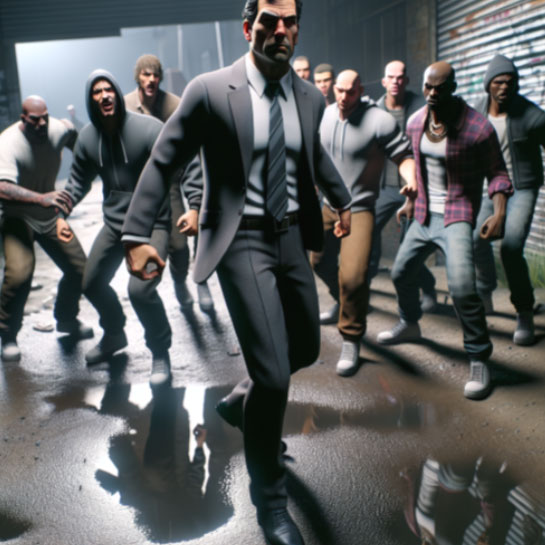
In another corner of the cosmos, an adventurer and entrepreneur known as Mr. H found his peaceful day disrupted by a group of thugs. However, unbeknownst to these miscreants, Mr. H was a martial arts maestro, having been trained by a legendary grandmaster. His skills were an ancestral secret, known only to an inner circle. As the first thug lunged at him from behind, Mr. H, with the grace of a panther, spun around, redirecting the momentum of the attacker. Simultaneously, a second thug swung a hammer towards his head. With a swift tilt of his body, Mr. H deftly avoided the blow, instead directing it towards the first thug, the force of the impact breaking his clavicle. Using the opportunity, Mr. H seized the second thug by the ankle, sending him flying into a wall with a calculated throw. The remaining thugs, recognizing Mr. H’s prowess, fled in fear, leaving Mr. H standing victorious.
This confrontation was being closely watched by a figure shrouded in an aura of malevolence, known as Beheric. He was an agent of the Nano-Splitters. His presence wasn’t accidental; he had orchestrated the attack to assess Mr. H’s skills. Pleased with the outcome, he decided to proceed with his scheme: hiring Mr. H to find Arion and infiltrate the heavily guarded Cyber Knights’ base.
However, Beheric’s lack of knowledge about Mr. H’s true identity was his undoing. Mr. H was Agent One, aka Henry, a member of the elite martial arts force of the Cyber Knights, the Dragons. As part of a meticulously crafted plan, Mr. H rejected Beheric’s offer in a manner that incensed him, forcing him to report back to his superiors.
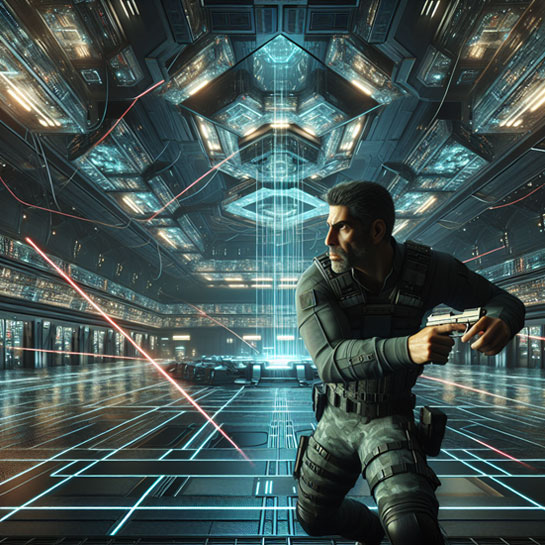
This provided the opportunity for Luka, Henry’s understudy, to infiltrate the Nano-Splitters network, tracking their connections back to their base. Beheric, in his rage, disregarded all security protocols, leaving a trail of mistakes for the Cyber Knights to exploit. His hasty entry through a maintenance gate, the bypassing of the biometric scanners, and the dismissal of the guards at the entrance, all provided an opening for the Cyber Knights.
As Beheric stormed through the headquarters, Luka utilized this chaos to penetrate their defenses, leaving electronic breadcrumbs for his team to follow. This reckless action, while dangerous, provided the Cyber Knights an invaluable opportunity. Henry, Esteban, and Donovan, donning their camouflaged Dragon uniforms, followed Luka into the heart of the Nano-Splitter base.
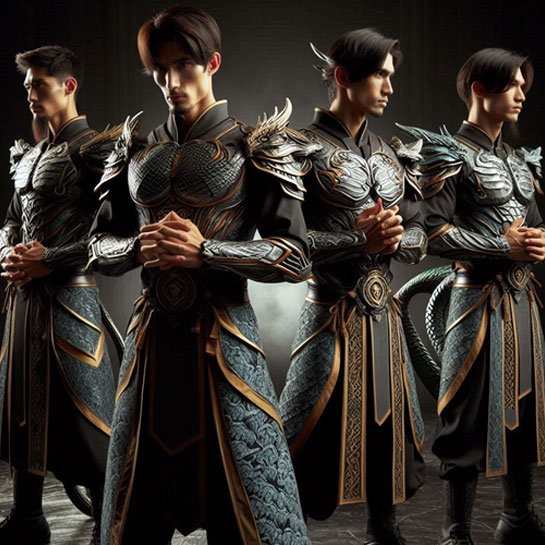
Once inside, they skillfully bypassed the security systems, navigating through the maze of biometric scanners and multifactor authentication protocols. A rendezvous with Luka allowed them to equip him with his uniform and proceed to the core of their mission. The Nano-Splitters, caught off guard, were no match for the trained expertise of the Dragons. Despite being outnumbered 30 to 1, the Dragons seized control of the base swiftly and efficiently.
Despite their success, Beheric managed to slip away in the ensuing chaos. His escape was a bitter pill to swallow, but it didn’t outweigh the strategic victory they had achieved. The mission didn’t go as planned, but the outcome surpassed Arion’s expectations. This mission became known as the genesis of the Dragons’ legend, marking a significant turn in the war against the Nano-Splitters. While the names of Esteban, Donovan, Henry, and Luka remained classified, it was widely acknowledged that without their courage and skill, a victory against the Nano-Splitters would have remained a distant dream.
Lesson: The tale underscores the critical importance of physical and workstation security. Physical safeguards serve as the first line of defense in protecting electronic information. By implementing measures such as controlled access to facilities and secure disposal of electronic media, organizations can prevent unauthorized individuals from gaining access to sensitive healthcare data. These physical security measures, including high fences, biometric scanners, and surveillance systems, are vital in maintaining the confidentiality and integrity of electronic information.
Equally important is the implementation of robust workstation security measures. Organizations must establish policies and procedures detailing the appropriate use of workstations and the secure positioning of screens to prevent unauthorized viewing. Furthermore, documenting hardware and electronic media movement, as well as access to them, helps ensure accountability and traceability. By prioritizing physical and workstation security, and sticking to these protocols organizations can protect against potential breaches and data compromises.


 The Knights had learned valuable lessons from their previous encounters. Their base was heavily fortified, with robust physical and workstation security that showed no vulnerabilities. It was a fortress of high fences topped with razor wire, watchtowers equipped with advanced surveillance systems, and biometric scanners controlling access via encrypted keycards. Inside this fortress, workstations were secured by encrypted networks and multifactor authentication protocols. Regular security drills ensured constant vigilance and preparedness.
In another corner of the cosmos, an adventurer and entrepreneur known as Mr. H found his peaceful day disrupted by a group of thugs. However, unbeknownst to these miscreants, Mr. H was a martial arts maestro, having been trained by a legendary grandmaster. His skills were an ancestral secret, known only to an inner circle. As the first thug lunged at him from behind, Mr. H, with the grace of a panther, spun around, redirecting the momentum of the attacker. Simultaneously, a second thug swung a hammer towards his head. With a swift tilt of his body, Mr. H deftly avoided the blow, instead directing it towards the first thug, the force of the impact breaking his clavicle. Using the opportunity, Mr. H seized the second thug by the ankle, sending him flying into a wall with a calculated throw. The remaining thugs, recognizing Mr. H’s prowess, fled in fear, leaving Mr. H standing victorious.
This confrontation was being closely watched by a figure shrouded in an aura of malevolence, known as Beheric. He was an agent of the Nano-Splitters. His presence wasn’t accidental; he had orchestrated the attack to assess Mr. H’s skills. Pleased with the outcome, he decided to proceed with his scheme: hiring Mr. H to find Arion and infiltrate the heavily guarded Cyber Knights’ base.
However, Beheric’s lack of knowledge about Mr. H’s true identity was his undoing. Mr. H was Agent One, aka Henry, a member of the elite martial arts force of the Cyber Knights, the Dragons. As part of a meticulously crafted plan, Mr. H rejected Beheric’s offer in a manner that incensed him, forcing him to report back to his superiors.
The Knights had learned valuable lessons from their previous encounters. Their base was heavily fortified, with robust physical and workstation security that showed no vulnerabilities. It was a fortress of high fences topped with razor wire, watchtowers equipped with advanced surveillance systems, and biometric scanners controlling access via encrypted keycards. Inside this fortress, workstations were secured by encrypted networks and multifactor authentication protocols. Regular security drills ensured constant vigilance and preparedness.
In another corner of the cosmos, an adventurer and entrepreneur known as Mr. H found his peaceful day disrupted by a group of thugs. However, unbeknownst to these miscreants, Mr. H was a martial arts maestro, having been trained by a legendary grandmaster. His skills were an ancestral secret, known only to an inner circle. As the first thug lunged at him from behind, Mr. H, with the grace of a panther, spun around, redirecting the momentum of the attacker. Simultaneously, a second thug swung a hammer towards his head. With a swift tilt of his body, Mr. H deftly avoided the blow, instead directing it towards the first thug, the force of the impact breaking his clavicle. Using the opportunity, Mr. H seized the second thug by the ankle, sending him flying into a wall with a calculated throw. The remaining thugs, recognizing Mr. H’s prowess, fled in fear, leaving Mr. H standing victorious.
This confrontation was being closely watched by a figure shrouded in an aura of malevolence, known as Beheric. He was an agent of the Nano-Splitters. His presence wasn’t accidental; he had orchestrated the attack to assess Mr. H’s skills. Pleased with the outcome, he decided to proceed with his scheme: hiring Mr. H to find Arion and infiltrate the heavily guarded Cyber Knights’ base.
However, Beheric’s lack of knowledge about Mr. H’s true identity was his undoing. Mr. H was Agent One, aka Henry, a member of the elite martial arts force of the Cyber Knights, the Dragons. As part of a meticulously crafted plan, Mr. H rejected Beheric’s offer in a manner that incensed him, forcing him to report back to his superiors.
 This provided the opportunity for Luka, Henry’s understudy, to infiltrate the Nano-Splitters network, tracking their connections back to their base. Beheric, in his rage, disregarded all security protocols, leaving a trail of mistakes for the Cyber Knights to exploit. His hasty entry through a maintenance gate, the bypassing of the biometric scanners, and the dismissal of the guards at the entrance, all provided an opening for the Cyber Knights.
As Beheric stormed through the headquarters, Luka utilized this chaos to penetrate their defenses, leaving electronic breadcrumbs for his team to follow. This reckless action, while dangerous, provided the Cyber Knights an invaluable opportunity. Henry, Esteban, and Donovan, donning their camouflaged Dragon uniforms, followed Luka into the heart of the Nano-Splitter base.
This provided the opportunity for Luka, Henry’s understudy, to infiltrate the Nano-Splitters network, tracking their connections back to their base. Beheric, in his rage, disregarded all security protocols, leaving a trail of mistakes for the Cyber Knights to exploit. His hasty entry through a maintenance gate, the bypassing of the biometric scanners, and the dismissal of the guards at the entrance, all provided an opening for the Cyber Knights.
As Beheric stormed through the headquarters, Luka utilized this chaos to penetrate their defenses, leaving electronic breadcrumbs for his team to follow. This reckless action, while dangerous, provided the Cyber Knights an invaluable opportunity. Henry, Esteban, and Donovan, donning their camouflaged Dragon uniforms, followed Luka into the heart of the Nano-Splitter base.
 Once inside, they skillfully bypassed the security systems, navigating through the maze of biometric scanners and multifactor authentication protocols. A rendezvous with Luka allowed them to equip him with his uniform and proceed to the core of their mission. The Nano-Splitters, caught off guard, were no match for the trained expertise of the Dragons. Despite being outnumbered 30 to 1, the Dragons seized control of the base swiftly and efficiently.
Despite their success, Beheric managed to slip away in the ensuing chaos. His escape was a bitter pill to swallow, but it didn’t outweigh the strategic victory they had achieved. The mission didn’t go as planned, but the outcome surpassed Arion’s expectations. This mission became known as the genesis of the Dragons’ legend, marking a significant turn in the war against the Nano-Splitters. While the names of Esteban, Donovan, Henry, and Luka remained classified, it was widely acknowledged that without their courage and skill, a victory against the Nano-Splitters would have remained a distant dream.
Lesson: The tale underscores the critical importance of physical and workstation security. Physical safeguards serve as the first line of defense in protecting electronic information. By implementing measures such as controlled access to facilities and secure disposal of electronic media, organizations can prevent unauthorized individuals from gaining access to sensitive healthcare data. These physical security measures, including high fences, biometric scanners, and surveillance systems, are vital in maintaining the confidentiality and integrity of electronic information.
Equally important is the implementation of robust workstation security measures. Organizations must establish policies and procedures detailing the appropriate use of workstations and the secure positioning of screens to prevent unauthorized viewing. Furthermore, documenting hardware and electronic media movement, as well as access to them, helps ensure accountability and traceability. By prioritizing physical and workstation security, and sticking to these protocols organizations can protect against potential breaches and data compromises.
Once inside, they skillfully bypassed the security systems, navigating through the maze of biometric scanners and multifactor authentication protocols. A rendezvous with Luka allowed them to equip him with his uniform and proceed to the core of their mission. The Nano-Splitters, caught off guard, were no match for the trained expertise of the Dragons. Despite being outnumbered 30 to 1, the Dragons seized control of the base swiftly and efficiently.
Despite their success, Beheric managed to slip away in the ensuing chaos. His escape was a bitter pill to swallow, but it didn’t outweigh the strategic victory they had achieved. The mission didn’t go as planned, but the outcome surpassed Arion’s expectations. This mission became known as the genesis of the Dragons’ legend, marking a significant turn in the war against the Nano-Splitters. While the names of Esteban, Donovan, Henry, and Luka remained classified, it was widely acknowledged that without their courage and skill, a victory against the Nano-Splitters would have remained a distant dream.
Lesson: The tale underscores the critical importance of physical and workstation security. Physical safeguards serve as the first line of defense in protecting electronic information. By implementing measures such as controlled access to facilities and secure disposal of electronic media, organizations can prevent unauthorized individuals from gaining access to sensitive healthcare data. These physical security measures, including high fences, biometric scanners, and surveillance systems, are vital in maintaining the confidentiality and integrity of electronic information.
Equally important is the implementation of robust workstation security measures. Organizations must establish policies and procedures detailing the appropriate use of workstations and the secure positioning of screens to prevent unauthorized viewing. Furthermore, documenting hardware and electronic media movement, as well as access to them, helps ensure accountability and traceability. By prioritizing physical and workstation security, and sticking to these protocols organizations can protect against potential breaches and data compromises.